
The Real Reason Home Sales Slowed in January. And It’s Not What You Think

If you saw headlines that talked about how “home sales fell sharply in January”, it probably raised an eyebrow, especially if you’re thinking about selling your house. But context matters.
Yes, in January, home sales declined. But that has more to do with seasonality and the weather than it does with any big drop-off in demand.
Reports coming out of the National Association of Realtors (NAR) say the pace of home sales fell roughly 8.4% last month compared to the month before. And that’s true. But it isn’t necessarily cause for alarm.
Data show it’s normal for sales to dip in January. In the last 4 years, that pattern has held true all but once. And sure, the decline we saw this year was a steeper drop-off than the norm (the yellow bars on the right), but that can be explained too. More on that in a moment.
The really important part you’re not going to get from the headlines is this: typically speaking, the pace of home sales picks back up in February as the spring market starts to take off. That’s shown in the green bars below.
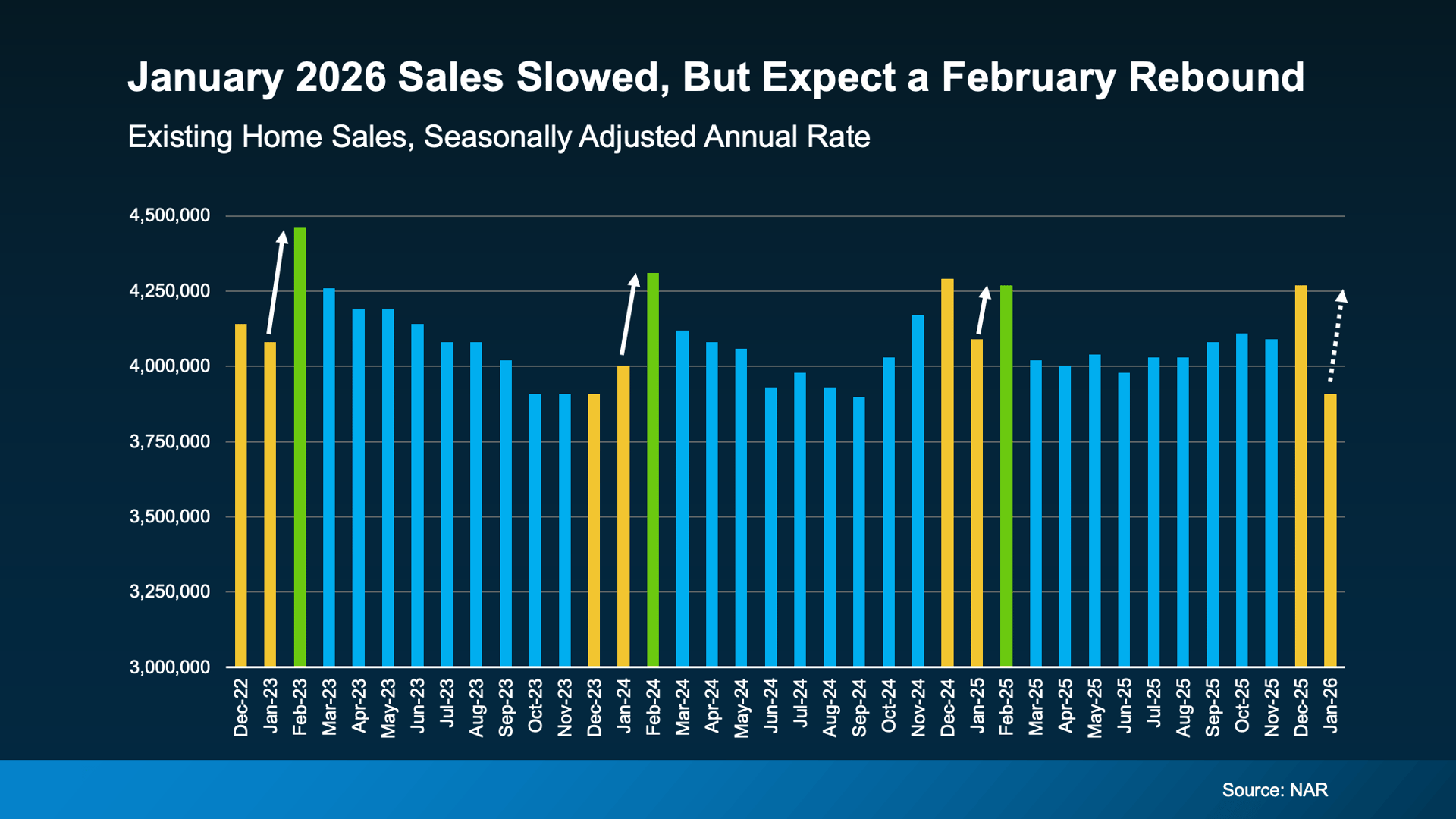
So even though the market slowed a bit momentarily, it should start to pick back up.
And just in case you’re wondering, why the bigger drop this year, especially with mortgage rates being lower than last year? Here’s your answer. As Realtor.com explains:
“Winter storm Fern, which dumped snow and ice across large swaths of the country, likely disrupted some closings, weighing on the data and making it difficult to pick out the housing market momentum trend from the weather noise.”
This January, 40 states were hit with widespread winter weather, according to the National Weather Service. And in real estate, that slows down the momentum. Here’s why.
Existing home sales data tracks closed transactions, not new contracts. So, if inspections, appraisals, or final walk-throughs get delayed by storms, those deals often slide into the next month instead of falling apart, especially when buyers and sellers are still trying to move forward.
January’s missing sales are more likely “postponed” than “lost”. They haven’t disappeared. They’re just taking a little longer to close.
The rest of the data still points to a market that has traction heading into spring.
Affordability has improved for the 7th month in a row, and buyers are regaining negotiating power in many markets throughout the nation. So, this one monthly report doesn’t mean buyers aren’t buying. It just means, as the weather warms up, activity should too.
Don’t confuse a weather-impacted month with a market losing steam. If anything, improving affordability is an indicator of more activity to come, not less.
If you have questions about what you’re hearing online or in the news, let’s chat. Because the truth is, a little context can give you back your peace of mind.

Homeowners looking to sell usually want three things: interested buyers, strong offers, and a short timeline.

What if you didn’t have a mortgage payment on your next house? It may sound a little unrealistic.

You may be in a unique position to help, thanks to the equity in your current house.

Whether you walk away with the maximum return or you end up cutting the price later.
If you saw headlines that talked about how “home sales fell sharply in January”.

If your current house is starting to feel like it’s holding you back instead of supporting your life.

Your equity isn’t just a number, it’s a powerful asset that can help you take your next big step in life.

Getting back to pre-pandemic levels signals a slow and steady return to what’s typical.

Buying your first home can feel frustrating when the numbers don’t line up the way you expected.
Whether you're buying your first home, selling a property, or navigating your next investment, Chris and Miranda bring the experience, strategy, and dedication to help you move forward with confidence.

Chris Siverhus & Miranda Gray
Chris Siverhus
(612) 816-4067
[email protected]
Miranda Gray
(651) 746-9965
[email protected]
920 W Broadway Ave Forest Lake, MN 55025